How to start a movie discussion without putting anyone on the spot
· Editorial team detroitnewsdaily24.com
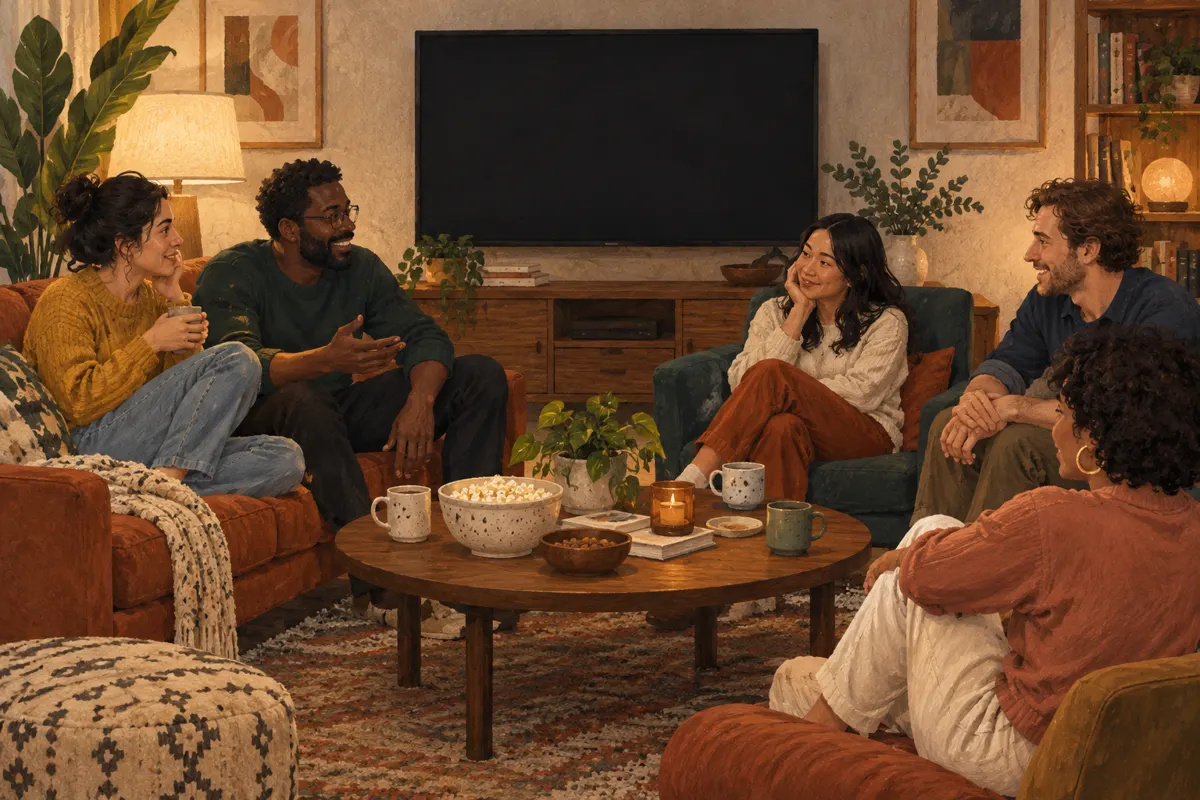
Start with one easy question for the whole group: “What scene stayed with you?” Let people volunteer, make passing welcome, and follow their answers before introducing another question. Move from memorable moments to characters and filmmaking choices, leaving bigger interpretations for later. Nobody needs a polished opinion or film vocabulary to join in.
Make the invitation easy to accept
A suggested opening is: “Anyone want to mention a moment they’re still thinking about? You can pass or just listen.” This gives people something concrete to recall without asking them to defend a verdict. Avoid starting with a compulsory round in which everyone must speak.
Before discussing the ending, check that everyone has finished the movie. Keep the opening invitation brief: people may disagree, change their minds, or leave a question unanswered. If the film touches on difficult experiences, keep questions about what appears on screen; nobody should need to share personal history to participate.
Allow a quiet pause after asking. If nobody answers, offer a short observation of your own, such as “I keep thinking about that last conversation,” then reopen the invitation. Avoid giving a full interpretation that everyone else has to respond to.
Begin with scenes people remember
For the first part of the conversation, ask about moments rather than the movie’s overall meaning. A person can describe an image, joke, line, or confusing exchange even if they have not decided whether they liked the film. Choose one of these proposed prompts and let the answers guide you.
- What moment stayed with you after the credits?
- Was there a scene you wanted to watch again?
- Where did the movie surprise you?
- Was anything unclear that you would like to talk through?
Follow an answer with “What about that moment caught your attention?” If someone cannot remember a character’s name, let them describe the person or scene. Correct details only when they matter to understanding the point. There is no need to turn a shared recollection into a memory test.
Move from a character’s choice to different interpretations
Once a scene gives the group a starting point, explore what a character did and how people understood it. Begin with the action itself before moving to motives. A useful proposed sequence is:
- Name a choice: “Which decision by a character caught your attention?”
- Explore the motive: “What do you think they wanted at that moment?”
- Look for support: “Was there a scene or line that gave you that impression?”
- Invite another reading: “Could that choice mean something else?”
A character’s decision can make sense to one viewer and feel unconvincing to another. Ask what each person noticed rather than pushing for agreement. If someone says they simply disliked a character, accept that answer; an optional follow-up is whether a particular moment shaped the reaction.
Ask how the movie created its effect
Shift from what happened to how it was shown. You do not need technical terms: talk about music, silence, lighting, acting, or how quickly scenes moved. Connect the question to a moment already mentioned so the discussion stays grounded.
- What did the music or silence add to that scene?
- Did an actor’s expression change how you understood a line?
- Was there a moment that felt rushed or deliberately slow?
- What did the movie show clearly, and what did it leave out?
Separate an observed effect from an assumed intention. “The silence made me uneasy” describes a response; “the director wanted everyone to feel uneasy” makes a claim about intent. You can explore possible intentions while keeping them tentative.
Leave room for disagreement and a simple ending
When opinions differ, try “What led you to that reading?” or “I noticed something different in that scene.” Avoid asking someone to justify their taste. If one person dominates, open the floor with “Does anyone want to add another angle?” without naming a quieter participant.
If discussion becomes personal, bring it back to the film: “Let’s stay with the character’s decision.” If it stalls, move to another scene or let it end. Close with an optional question: “Is there anything you’d notice differently on a second viewing?” A satisfying conversation can finish with several interpretations still open.