How to organize a backyard scavenger hunt with everyday objects
· Editorial team detroitnewsdaily24.com
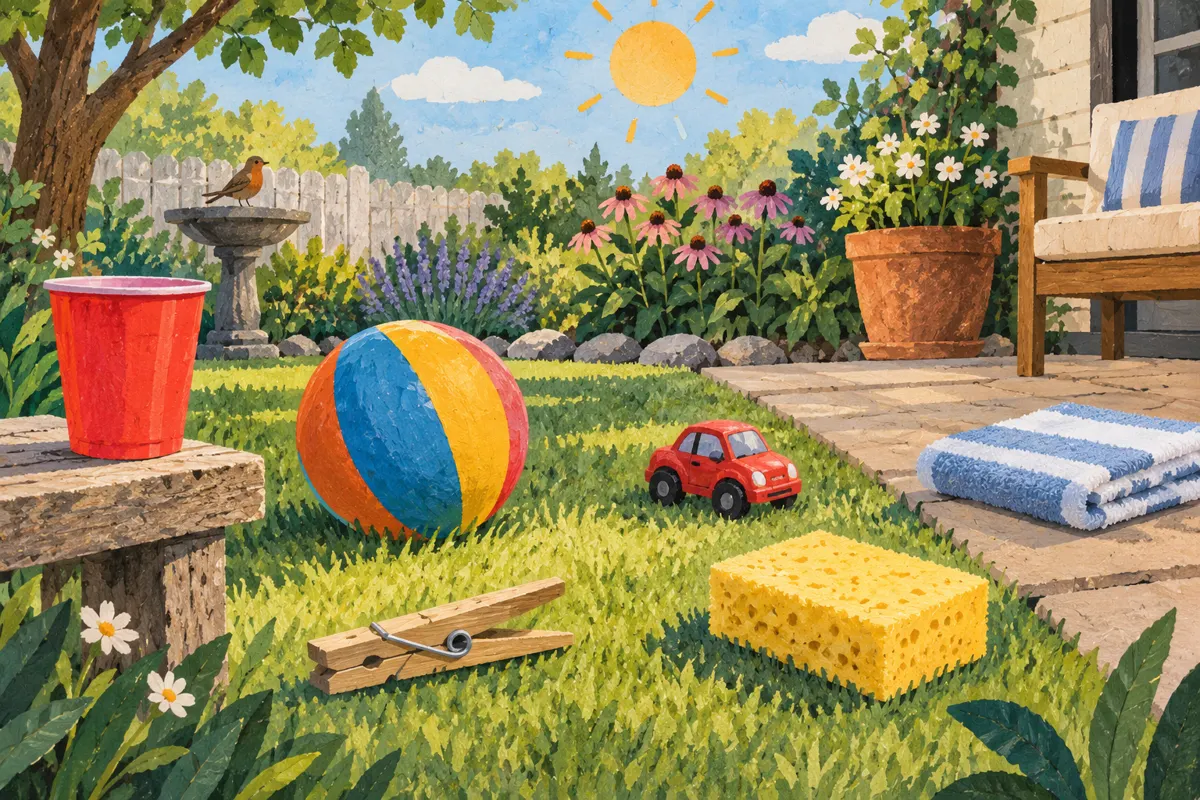
To organize a backyard scavenger hunt, choose objects that children can safely find, write a short list of clues, and show everyone where they may play. Use items already at home, such as a plastic cup, a ball, or a clothespin. The proposed plan below gives you a simple starting point you can adjust to your yard and the ages taking part.
Choose the objects and a simple format
Start by looking around your backyard and checking which suitable items are available. A hunt works best when the targets actually exist in the play area and the difficulty suits the participants. Paper, a pencil or crayon, and a bag or bucket for permitted finds are enough to get started.
For this proposed version, use six everyday objects: a plastic cup, a ball, a clothespin, a clean sponge, a toy car, and a small towel. Substitute anything you do not have with another sturdy, familiar item. Skip glass, sharp tools, valuable belongings, and objects small enough to be a concern for the youngest players.
Give players the whole list at the start so they can search in any order. Decide whether they should collect each object or simply point it out and mark it off. Pointing works well when several children share the same targets, because the first finder does not remove an item everyone else still needs.
Set boundaries before hiding anything
Consider safety and supervision before the hunt begins, especially in a larger space. An adult may need to help guide the search. Encourage children to respect plants and the surrounding landscape as they play.
Use the following proposed setup routine to make the permitted area clear:
- Walk the play area with everyone. Identify its edges using visible landmarks, such as the fence, patio, or a row of chairs.
- Name off-limits places, including the street, garage, shed, pool area, and any space containing tools or chemicals.
- Place targets where children can reach them from the ground without climbing, opening containers, or moving heavy objects.
- Choose a meeting spot and a clear signal that means everyone should stop and return.
Explain that clues never require leaving the boundary. If a child cannot find something, they should ask for a hint rather than search farther away.
Write short clues with clear answers
The proposed clues below describe what each object does. They avoid complicated riddles and can be read aloud. Match every clue to the actual object you put outside; a sponge intended for washing dishes should not be described as a bath toy.
- Plastic cup: Find something you can drink water from.
- Ball: Find something round that you can roll.
- Clothespin: Find something that clips clothes onto a line.
- Clean sponge: Find something soft used for cleaning.
- Toy car: Find a tiny vehicle with wheels.
- Small towel: Find something used to dry your hands.
Write each clue on its own line with a space for a check mark. No printer is necessary. If two objects could answer the same clue, add one identifying detail, such as color, or agree beforehand that either answer counts.
Adjust the hunt for different ages
The source suggests adjusting list difficulty to the audience and adding comparison details for older children. It also describes timed play or team competition as optional ways to change the activity.
For this proposed household-object hunt, adapt the same targets rather than preparing separate games:
- For younger children, draw the objects, name them directly, and leave them partly visible. Search together.
- For independent readers, use the short clues and place objects behind easy visual cover, such as a patio chair.
- For older children, add a second detail: find the blue cup or the ball smaller than the towel.
- For mixed ages, pair players and rotate who reads, searches, and checks off each answer.
Explain the rules and finish together
Before starting, explain the proposed rules: stay inside the boundary, walk near other players, leave plants and wildlife alone, and pick up only designated targets. Demonstrate how to record one find. Ask a player to repeat the boundary and collection rule so you can clear up any confusion.
Finish when everyone completes the list or when interest begins to fade. Gather at the meeting spot, compare answers, and reveal any missed objects. Let each child choose a favorite clue, then return household items together. If players want another round, invite them to propose new clues while an adult checks the hiding places.